
The Mandela Effect is one of the strangest examples of how human memory can go wrong.
Ask someone to picture the Monopoly Man, and most people will describe him wearing a monocle. He doesn’t. Never has.
Ask someone how the Berenstain Bears is spelled, and huge numbers of people will confidently write “Berenstein.” It’s never been spelled that way.
These aren’t random individual mistakes. They’re shared, specific, confident false memories held by enormous numbers of people who have never met each other. That phenomenon has a name — the Mandela Effect — and the real explanation is stranger, and far more grounded in real psychology, than the internet’s favorite theory of parallel universes.
Table of Contents
- Where the Name Came From
- What the Mandela Effect Actually Is
- The Psychology Behind It
- Famous Examples, Explained
- A 2022 Study That Took This Seriously
- Why This Isn’t Evidence of Alternate Realities
- Myth vs. Evidence
- Frequently Asked Questions
- Conclusion
- Key Takeaways
Where the Name Came From
The term was coined in 2010 by paranormal researcher Fiona Broome, after she discovered she wasn’t alone in a strange, specific false memory: she believed Nelson Mandela had died in prison sometime in the 1980s.
He hadn’t. Mandela was released from prison in 1990, went on to serve as President of South Africa, and lived until 2013. But Broome found that many other people online shared her exact false memory — some even recalling details like news coverage of his funeral, which never happened.
That shared, oddly specific false memory became the namesake for a much broader phenomenon.
What the Mandela Effect Actually Is
The Mandela Effect describes situations where a large group of people confidently misremember the same fact, detail, or event in the same incorrect way — often with genuine surprise or even defiance when shown they’re wrong.
The defining feature isn’t just that a memory is false. Individual false memories are extremely common. For a deeper look at how false memories form, read our article on False Memories. What makes the Mandela Effect distinct is that the same false memory shows up consistently across large numbers of unconnected people.
The Psychology Behind the Mandela Effect
Researchers point to several overlapping mechanisms, not one single cause.
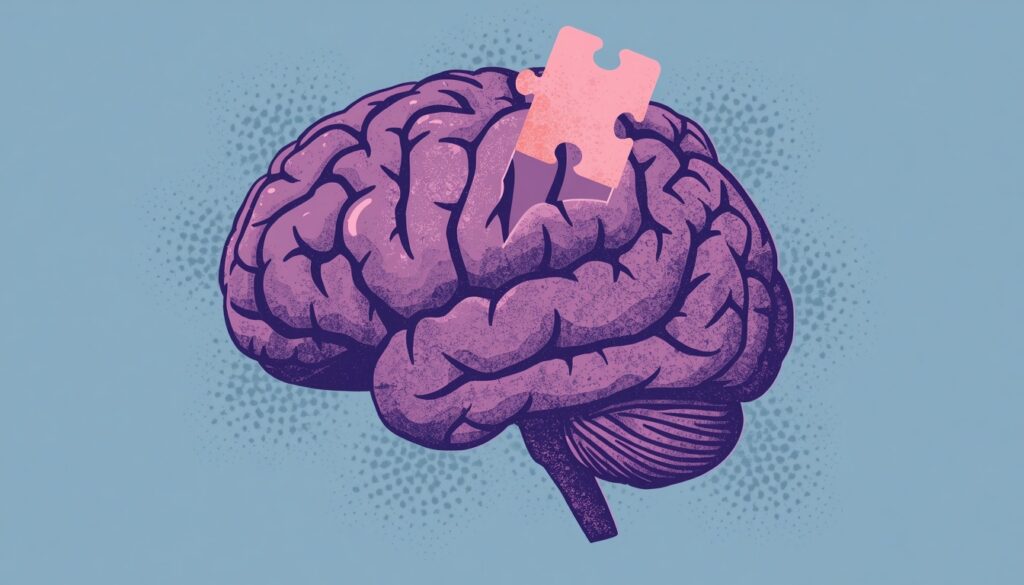
Confabulation. This is the unconscious creation of false memories that feel completely real, without any intention to deceive. Sometimes described as “honest lying,” confabulation happens when your brain fills a memory gap with something that feels plausible, based on expectation rather than actual experience.
Schema theory. Your brain doesn’t store memories like a perfect video file — it stores the general “gist” of things, organized around expectations of how the world usually works, called schemas. If a detail doesn’t quite fit your existing mental model, your brain quietly edits it to fit. Monopoly Man wearing a monocle fits a broader cultural schema of “old-timey rich man” imagery (think Mr. Peanut), even though the actual character never wore one.
Source confusion. Sometimes a memory is real, but its origin gets mixed up — you might be blending an actual memory with something you saw in a parody, a meme, or a similar but different product.
Memory conformity and suggestibility. Once a false memory starts circulating — especially online — seeing large groups of other people confidently describe the same false detail can actually shift your own memory to match theirs. Every time a shared memory gets recalled and reinforced by a group, it becomes slightly more flexible and easier to reshape before being stored again.
Famous Examples, Explained
The Berenstain Bears. Widely misremembered as “Berenstein.” This is frequently cited as a schema effect — “-stein” is a far more common English surname ending than “-stain,” so the brain quietly autocorrects toward the more familiar pattern.
“Luke, I am your father.” The actual Star Wars line is “No, I am your father.” The misremembered version has been repeated so often in pop culture parody that the parody itself may now be reinforcing the false memory more than the original scene does.
The Monopoly Man’s monocle. No monocle, ever. Likely explained by schema theory blending him with other “wealthy gentleman” imagery from the same era, like Mr. Peanut, who genuinely does wear one.
A 2022 Study That Took This Seriously
Researchers at the University of Chicago studied what they called the “Visual Mandela Effect” — false memories specifically about well-known images and logos. Their work connected these errors directly to schema theory, showing that people consistently misremember visual details in ways that align with what their brain expects a familiar image “should” look like, rather than what it actually looks like.
This matters because it moves the Mandela Effect from internet folklore into something researchers can actually measure and study systematically, rather than dismissing it as coincidence or urban legend.
Why the Mandela Effect Isn’t Evidence of Alternate Realities
The internet’s favorite explanation for the Mandela Effect is that it’s evidence of parallel universes bleeding into each other — that people “remember” a different timeline because, in some sense, they lived through one.
There’s no scientific evidence supporting this, and it isn’t taken seriously by memory researchers, for a straightforward reason: every mechanism actually driving the Mandela Effect (confabulation, schema-driven errors, source confusion, memory conformity) is already well-documented in completely unrelated areas of memory research, with no need for a multiverse to explain any of it. The same processes that make individual eyewitnesses misremember car accidents also explain why millions of people misremember a logo.
The parallel-universe explanation is a much less likely answer competing against an already well-supported, ordinary one — and when that’s the case, the ordinary explanation is almost always correct.
Myth vs. Evidence
Myth: The Mandela Effect proves that reality has shifted or that parallel timelines exist. Evidence: Every documented case is explainable through well-established memory mechanisms already studied for decades in unrelated contexts.
Myth: If thousands of people remember something the same way, it’s more likely to be true. Evidence: Shared false memories can actually become more confident and widespread specifically because of group reinforcement — popularity doesn’t equal accuracy.
Myth: The Mandela Effect only happens with obscure, unimportant details. Evidence: It happens with well-known, frequently-seen details too — familiarity doesn’t protect against schema-driven memory errors; if anything, very familiar things are more likely to get quietly “corrected” by the brain’s expectations.
Frequently Asked Questions
What is the Mandela Effect in simple terms? It’s when a large number of unconnected people confidently share the exact same incorrect memory about a fact, image, or event.
Why is it called the Mandela Effect specifically? It’s named after Nelson Mandela, because the phenomenon was first identified and named in 2010 after many people discovered they shared a false memory of him dying in prison in the 1980s, when he was actually released and later became president.
Is the Mandela Effect real? The experience is genuinely real and measurable — large groups of people really do share specific false memories. What’s not supported by evidence is the parallel-universe explanation some people attach to it.
What causes the Mandela Effect? A combination of confabulation, schema theory (the brain filling gaps based on expectation), source confusion, and memory conformity, where shared false memories reinforce each other in groups, especially online.
Why do so many Mandela Effect examples come from childhood memories? Childhood memories tend to be less frequently rehearsed and more reconstructed over time, making them more susceptible to schema-driven errors and outside suggestion than recent, frequently-reinforced memories.
Can the Mandela Effect happen to just one person? An individual false memory happens constantly and isn’t unusual on its own. The Mandela Effect specifically refers to the same false memory being shared across many unconnected people — the “shared” part is what defines it.
Does social media make the Mandela Effect worse? Very likely, yes. Seeing large groups online confidently describe the same false detail can reinforce and spread a shared false memory faster than would happen through individual, disconnected experiences.
Is there a real scientific study on the Mandela Effect? Yes — researchers at the University of Chicago studied what they termed the “Visual Mandela Effect,” connecting it to schema theory and demonstrating it can be studied and measured under controlled conditions.
Conclusion
The Mandela Effect feels uncanny because it violates an assumption most people don’t even realize they’re making: that vivid, widely-shared memories must be accurate. They don’t have to be. Memory was never built to work like a video recording — it’s a reconstruction, shaped by expectation, and when enough people share the same expectations, they can end up sharing the same mistake.
That’s not proof of a glitch in reality. It’s proof of how ordinary, and how collectively fallible, human memory actually is.
Key Takeaways
- The Mandela Effect describes large groups of unconnected people sharing the exact same false memory.
- It’s explained by well-documented memory mechanisms: confabulation, schema theory, source confusion, and memory conformity — not parallel universes.
- Schema theory suggests the brain fills memory gaps based on expectation, which explains why false details like the Monopoly Man’s monocle feel so “obviously” true.
- Social media and group reinforcement can spread and strengthen shared false memories faster than isolated individual errors would occur.
- A 2022 University of Chicago study formally connected the “Visual Mandela Effect” to schema theory, giving the phenomenon real scientific grounding.
Related Reading
Why Do We Forget Names? 7 Psychology Facts Explained
Can Your Brain Predict the Future?
False Memories: 7 Psychology Facts About How Your Brain Rewrites the Past